


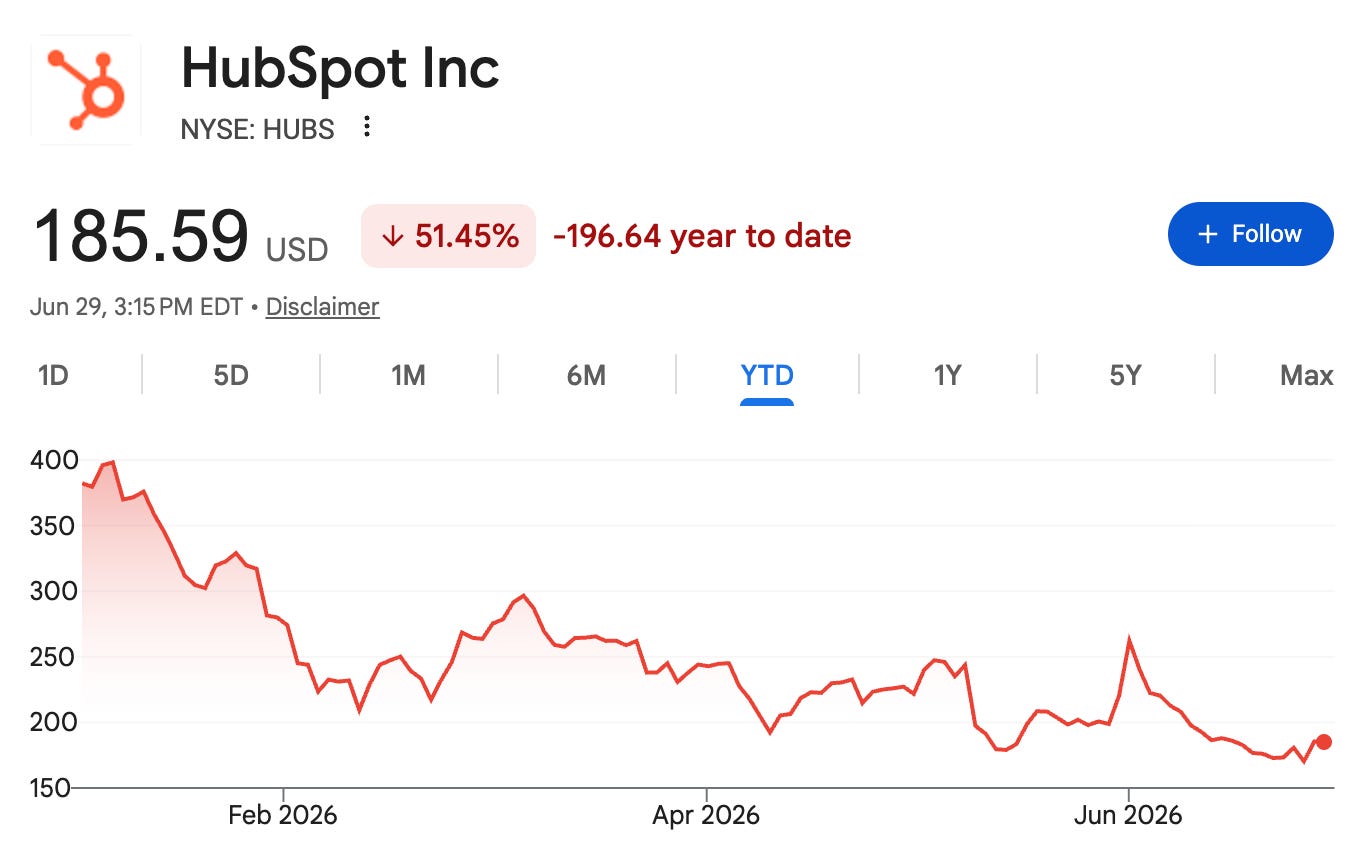
The stock market can sometimes overreact or be fickle. The recent sector wide multiple compression for SaaS stocks is notable considering they were the darlings for quite a while.
I understood the rationale at an intellectual level, but a recent experience made me realize first hand what these companies are dealing with.
Take Hubspot for example. Great company, great product. In the past when I have moved from the company side to an independent advisor or during a job search, it was very easy to spin up HubSpot to use as my personal CRM to manage all the outreach and opportunities in an organized way.
This time, I just used a project in Claude co-work, and within half a day I had a system in place that far exceeded the capability and usefulness of HubSpot for what I want to do. And I’m sure it will continue to evolve more to support my business development activities.
I just started with a simple prompt and took it from there. Now I can add contacts, companies, and rich data about every entity. Claude keep track of my opportunities, gives me a morning brief every day, and interacts with my email and calendar.
All of this is basic stuff, but the difference is that Claude is actively helping me add context and make connections within my network, and I can interact with it in ways that are more natural and satisfying than maintaining something that was designed to meet an entire market’s needs, not my specific needs or preferences.
Granted, this is a corner case, and not an enterprise implementation. But I think the issue extends to enterprise decisions. If you had asked me 3 years ago if a new MGA should build a proprietary stack or just buy something off the shelf I would have confidently advised the latter. Now I think the obvious answer is to build, if your team has the ability to.
These SaaS giants aren’t going to just sit back and let themselves become obsolete. They have a huge customer base and many are deeply integrated into their customers’ overall tech stack and users. They have the resources to respond and evolve.
But the multiple compression reflects the reality that they are now in competition with foundation models which are rapidly evolving and operate on a different plane. Pricing models and costs will have to adapt, and enterprise customers are no longer going to feel that a third-party SaaS is the only viable option.